October 21, 2026
Uncategorized
Testosterone for Men and the Low T Question
Testosterone for men can affect energy, strength, libido and mood. Learn when symptoms merit a clinical assessment first and how…
Read more


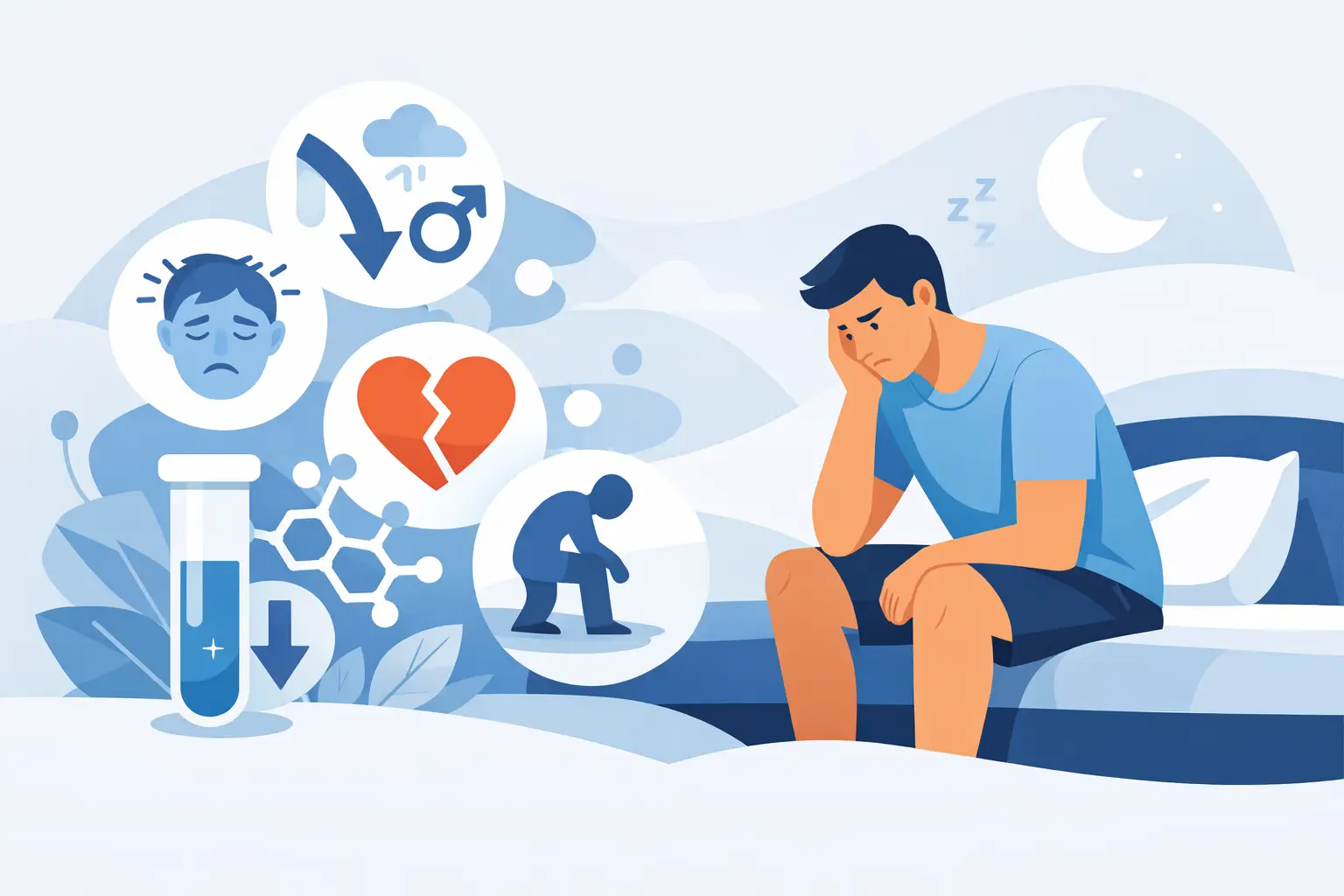
You are still training, working and showing up for the people who rely on you. But your drive has flattened, recovery takes longer, your libido is not what it was, and you no longer feel like yourself. Low testosterone symptoms in men often develop gradually, which makes them easy to dismiss as stress, ageing or a busy season.
That is exactly why a clear clinical assessment matters. Testosterone affects far more than gym performance. It has a role in sexual function, mood, bone health, muscle maintenance, red blood cell production and body composition. Yet the symptoms linked to low levels are not specific to testosterone alone. The right next step is not self-diagnosis. It is finding the reason behind the change.
Low testosterone, clinically described as male hypogonadism when confirmed through symptoms and testing, does not look identical in every man. Some notice a distinct shift in sexual health. Others first see changes in training output, motivation or body composition.
A lower sex drive is one of the more recognisable signs. You may have fewer sexual thoughts, reduced interest in intimacy or fewer spontaneous erections. Erectile difficulties can also occur, although they are commonly influenced by blood flow, stress, sleep, alcohol, medication, relationship factors and cardiometabolic health. They should not automatically be attributed to testosterone.
Energy can be another clue, particularly when persistent fatigue is out of proportion to your workload or sleep. Men may describe lower motivation, reduced confidence, irritability, poor concentration or a sense that their usual edge has disappeared. These changes are real, but they can also overlap with depression, anxiety, burnout, thyroid conditions and sleep disorders.
Physical changes may include declining strength despite consistent training, reduced lean muscle mass, an increase in body fat, poorer exercise recovery or lower bone density over time. Some men notice hot flushes, reduced body hair or breast tenderness, though these are less common and deserve timely medical review.
The pattern matters more than any one symptom. A few poor nights of sleep and a flat week in the gym do not confirm a hormone problem. Ongoing changes across sexual health, energy, mood and physical function are more meaningful, especially when they interfere with daily life.
Modern life can imitate low testosterone remarkably well. Long work hours, inconsistent sleep, high alcohol intake, under-fuelling, hard training without adequate recovery and chronic stress can all affect how you feel. They may also influence hormone measurements temporarily.
Sleep is a major example. Testosterone production follows a daily rhythm and is closely tied to sufficient, high-quality sleep. Obstructive sleep apnoea can leave a man exhausted, affect sexual function and alter hormonal health. Treating the sleep issue may be the priority, rather than assuming testosterone is the answer.
Body composition is another important factor. Higher levels of visceral fat are associated with lower testosterone, while substantial calorie restriction and excessive endurance training can also affect reproductive hormones. The relationship is not always simple: low testosterone can contribute to changes in body composition, and changes in body composition can affect testosterone.
Certain medicines and health conditions may play a role too. Long-term opioid use, some corticosteroids, significant illness, poorly controlled diabetes, kidney or liver disease, and disorders involving the testes or pituitary gland can all require investigation. This is why a quick online questionnaire cannot replace a proper clinical history.
A testosterone result only has meaning in context. Levels naturally vary through the day, are usually highest in the morning, and can be affected by poor sleep, recent illness, alcohol, hard training and calorie intake. One result taken at the wrong time or during a stressful week can create more confusion than clarity.
A clinician will typically consider symptoms alongside appropriately timed blood tests, often repeated where needed. They may assess total testosterone and, when relevant, factors that influence how much testosterone is available to tissues. Other tests can help identify contributing issues, such as thyroid dysfunction, elevated prolactin, iron overload, diabetes risk or a pituitary concern.
Age-specific expectations also need care. Testosterone generally declines with age, but lower energy at 45 or 55 is not automatically a hormone deficiency. The goal is to identify clinically meaningful deficiency, not to chase a number or compare yourself with someone else’s result.
This distinction protects men from two common mistakes: ignoring a legitimate health issue because the symptoms seem vague, and pursuing hormonal treatment based on a single borderline test without understanding the cause.
Arrange a medical review when symptoms persist for several weeks, affect your relationships, work or training, or occur alongside significant physical changes. It is particularly worthwhile if lower libido and erectile difficulties are paired with fatigue, reduced strength or mood changes.
Seek prompt medical attention for severe headaches with vision changes, breast discharge, sudden testicular pain or swelling, or symptoms following a head injury. These are not routine signs of low testosterone and may point to conditions requiring urgent assessment.
Fertility should be raised early in the conversation. If you are trying for a child now or may want children in the future, tell the clinician before considering any hormone-related treatment. Some approaches can reduce sperm production, sometimes substantially. A performance goal should never eclipse a family-planning goal.
A useful plan begins with the fundamentals: a full symptom history, medical history, medicines and supplements, alcohol and recreational substance use, sleep quality, training load and fertility intentions. Blood pressure, waist measurement and broader cardiometabolic risk may also be relevant.
For many men, the first opportunity is improving the factors that are suppressing health and performance. Consistent sleep, assessment for sleep apnoea, resistance training, adequate protein and energy intake, reduced heavy alcohol use, and management of stress can meaningfully improve how you feel. These changes are not a substitute for investigating genuine deficiency, but they are often part of the solution.
Where a hormonal condition is confirmed, a doctor may discuss the management options, expected benefits, limitations and risks based on your health profile. Testosterone therapy is not a general vitality product and it is not appropriate for every man with fatigue or a lower-than-usual libido. It requires ongoing clinical oversight because hormone levels, blood count, prostate-related considerations, cardiovascular risk factors, side effects and treatment response may need monitoring.
Be cautious of anyone who promises a guaranteed outcome, treats a laboratory number in isolation or encourages you to use unregulated products. Hormonal health is not an area for shortcuts. The right care is clinician-led, personalised and built around measurable health outcomes rather than hype.
The most useful question is not, “How can I maximise my testosterone?” It is, “Why has my energy, sexual health, mood or physical performance changed, and what is the safest way to address it?” Sometimes the answer is sleep, nutrition, mental health support or management of an underlying condition. Sometimes further hormonal investigation is appropriate.
Pay attention to persistent changes, bring a clear timeline of your symptoms to a qualified clinician, and be honest about your goals. Reclaiming energy, strength, mood and drive starts with understanding what your body is signalling – then acting on evidence, not assumptions.

Testosterone for men can affect energy, strength, libido and mood. Learn when symptoms merit a clinical assessment first and how…
Read more
When does ED treatment work? Learn what affects response, why low testosterone matters, and when a doctor should investigate erectile…
Read more
Considering testosterone therapy? Learn how low testosterone is assessed, who may benefit, and why doctor-led monitoring matters for Australian men…
Read moreNo pressure. No commitment. Just clarity and next steps.