October 21, 2026
Uncategorized
Testosterone for Men and the Low T Question
Testosterone for men can affect energy, strength, libido and mood. Learn when symptoms merit a clinical assessment first and how…
Read more


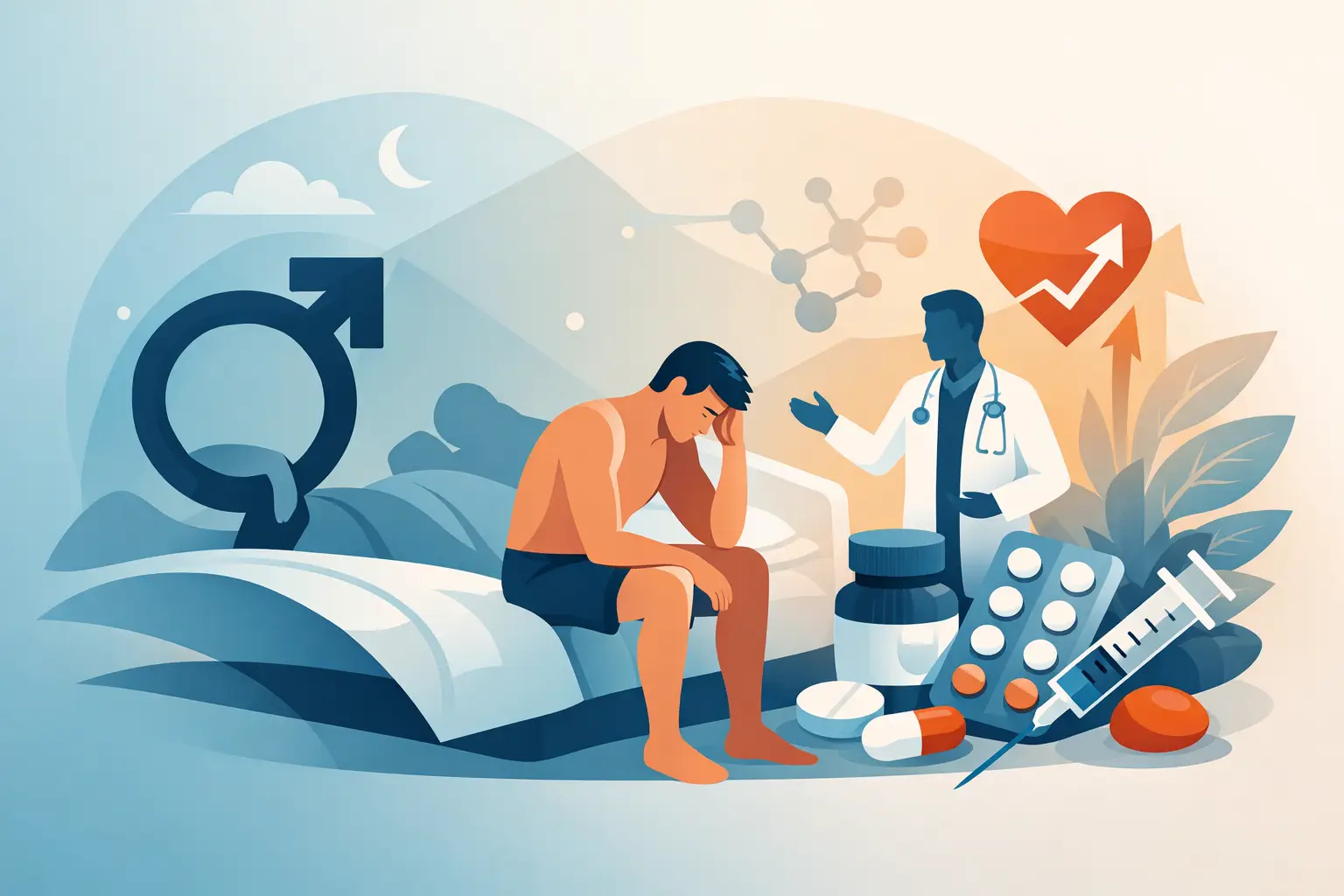
Erectile dysfunction is rarely just a bedroom problem. It can affect confidence, connection, training motivation and overall quality of life. The best erectile dysfunction treatments do more than chase a short-term result – they identify what is interfering with sexual function and address it with a safe, clinically appropriate plan.
That matters because erections rely on several systems working together: blood flow, nerve signalling, hormone balance, mental state and sexual context. A treatment that works well for one person may be unsuitable, ineffective or unsafe for another. The most efficient path is not guesswork or unregulated products. It is a proper clinical assessment followed by care that fits your health profile and goals.
Occasional difficulty getting or maintaining an erection is common, particularly during periods of poor sleep, stress, illness, heavy alcohol use or relationship pressure. Persistent erectile dysfunction, however, deserves attention.
For many men, the issue has a physical component. Cardiovascular health, high blood pressure, elevated blood sugar, excess body fat, sleep apnoea, smoking and some medications can all impair blood flow or nerve function. Erectile dysfunction can sometimes be an early marker of broader vascular health concerns, especially when it develops gradually.
Hormonal factors may also contribute. Low testosterone can affect libido, mood and energy, and may influence erectile function, although it is not the explanation in every case. Anxiety, depression, performance pressure, relationship dynamics and past sexual experiences can be equally significant. Often, there is more than one driver.
A clinician should also review the pattern. Difficulty in every setting calls for a different investigation from difficulty that occurs only with a partner, after alcohol, or during high-stress periods. Details matter because they guide better decisions.
Before discussing treatment options, a quality assessment should look beyond the symptom itself. This typically includes medical history, current medicines, lifestyle factors, mental health, sexual history and relevant health risks. Depending on the situation, a doctor may recommend blood pressure checks, pathology testing or further investigation.
This approach can feel less immediate than buying a product online, but it is more useful. It helps distinguish between vascular, hormonal, medication-related and psychological contributors. It also identifies situations where erectile dysfunction should prompt attention to heart health, diabetes risk or sleep quality.
Be direct in a consultation. Mention changes in libido, morning erections, energy, mood, alcohol intake, training load, sleep, relationship stress and any supplements or products you have tried. Good care is built on accurate information, not on what feels easiest to disclose.
Lifestyle changes are not a throwaway recommendation. For men whose erectile dysfunction is linked to cardiometabolic health or chronic stress, they can make a meaningful difference and improve treatment response.
Regular aerobic exercise supports circulation, while resistance training can improve body composition, metabolic health and confidence. The aim is consistency, not punishment. A sustainable weekly routine will outperform sporadic hard sessions, particularly if poor recovery is already part of the problem.
Sleep is another high-value lever. Short sleep and untreated sleep apnoea are associated with reduced energy, poorer hormone regulation and impaired sexual function. If you snore heavily, wake unrefreshed or feel excessively sleepy during the day, raise it with your doctor.
Reducing smoking, moderating alcohol and improving nutrition can support vascular function. If body weight is affecting blood pressure, blood sugar or fitness, clinically guided metabolic support may be relevant. The goal is better health markers and capability, not a crash diet.
These changes take time. They should not be presented as a moral test or a substitute for medical treatment when medical treatment is indicated. They are the baseline that makes every other intervention more effective.
When appropriate, a doctor may discuss prescription oral therapies that support the blood-flow response required for an erection. These treatments are commonly effective, but they are not suitable for everyone. Certain heart conditions, blood pressure patterns and medicines can create serious interactions, which is why an online questionnaire without meaningful clinical review is not enough.
The timing, expected effect and potential side effects should be explained clearly before treatment begins. Headache, flushing, indigestion, nasal congestion and light-headedness can occur. If side effects are disruptive or the treatment is not effective, a clinician can reassess rather than leaving you to trial products at random.
For some men, medication review is an important part of the solution. A medicine being used for blood pressure, mood, pain or another condition may affect sexual function. Never stop a prescribed medicine independently, but ask whether an alternative is clinically appropriate.
Testosterone treatment is not a universal erectile dysfunction treatment. It may be considered where symptoms, repeat testing and clinical assessment support a diagnosis of testosterone deficiency. If testosterone levels are normal, adding more is unlikely to resolve the underlying issue and may carry unnecessary risk.
When hormone treatment is clinically indicated, it requires ongoing monitoring. The focus should be on restoring appropriate health outcomes under doctor supervision, not pursuing a number or an unrealistic performance claim. Erectile function may improve for some men, particularly when low libido and low energy are part of the picture, but blood-flow treatment or other care may still be needed.
Some people benefit from non-drug options such as vacuum erection devices. They can be useful where prescription therapies are unsuitable or ineffective, though they require correct use and may not suit everyone.
Psychosexual counselling or therapy can be highly effective when anxiety, relationship tension or performance pressure is involved. This is not an admission that the problem is “all in your head”. Psychological stress has real effects on arousal and the nervous system. Addressing it can restore confidence and reduce the cycle of worry followed by further difficulty.
Specialist referral may be appropriate for complex cases, significant penile curvature, pelvic surgery history, neurological conditions or erectile dysfunction that does not respond to initial treatment. Procedures are generally reserved for selected situations after less invasive approaches have been considered.
Be cautious with products marketed as natural sexual enhancers, performance boosters or instant fixes. Some may contain undeclared prescription substances or ingredients that interact with other medicines. “Herbal” does not automatically mean safe, and a product sold without a proper assessment cannot account for your cardiovascular history or current medication.
Avoid black-market products, copied branding and suppliers who make guarantees. Sexual health is an area where embarrassment can make shortcuts tempting. It is also an area where poor-quality products and missed medical red flags can cause real harm.
Seek urgent medical attention for chest pain, fainting, sudden vision or hearing changes, or an erection lasting more than four hours. These are not side effects to wait out.
The right plan should be private, practical and medically accountable. Look for a service that uses Australian-registered practitioners, conducts a genuine suitability assessment and provides follow-up rather than treating erectile dysfunction as a one-off transaction.
At OptivHealth, the emphasis is on doctor-led assessment and ongoing support for people who want to improve sexual health as part of broader performance, hormone and metabolic health. The appropriate next step may be lifestyle intervention, treatment for an underlying condition, psychological support, prescription therapy, or a combination.
Start the conversation early. Erectile dysfunction is common, treatable and often informative. A clear assessment can replace uncertainty with a plan that supports not only sexual performance, but the health systems behind it.

Testosterone for men can affect energy, strength, libido and mood. Learn when symptoms merit a clinical assessment first and how…
Read more
When does ED treatment work? Learn what affects response, why low testosterone matters, and when a doctor should investigate erectile…
Read more
Considering testosterone therapy? Learn how low testosterone is assessed, who may benefit, and why doctor-led monitoring matters for Australian men…
Read moreNo pressure. No commitment. Just clarity and next steps.