October 21, 2026
Uncategorized
Testosterone for Men and the Low T Question
Testosterone for men can affect energy, strength, libido and mood. Learn when symptoms merit a clinical assessment first and how…
Read more


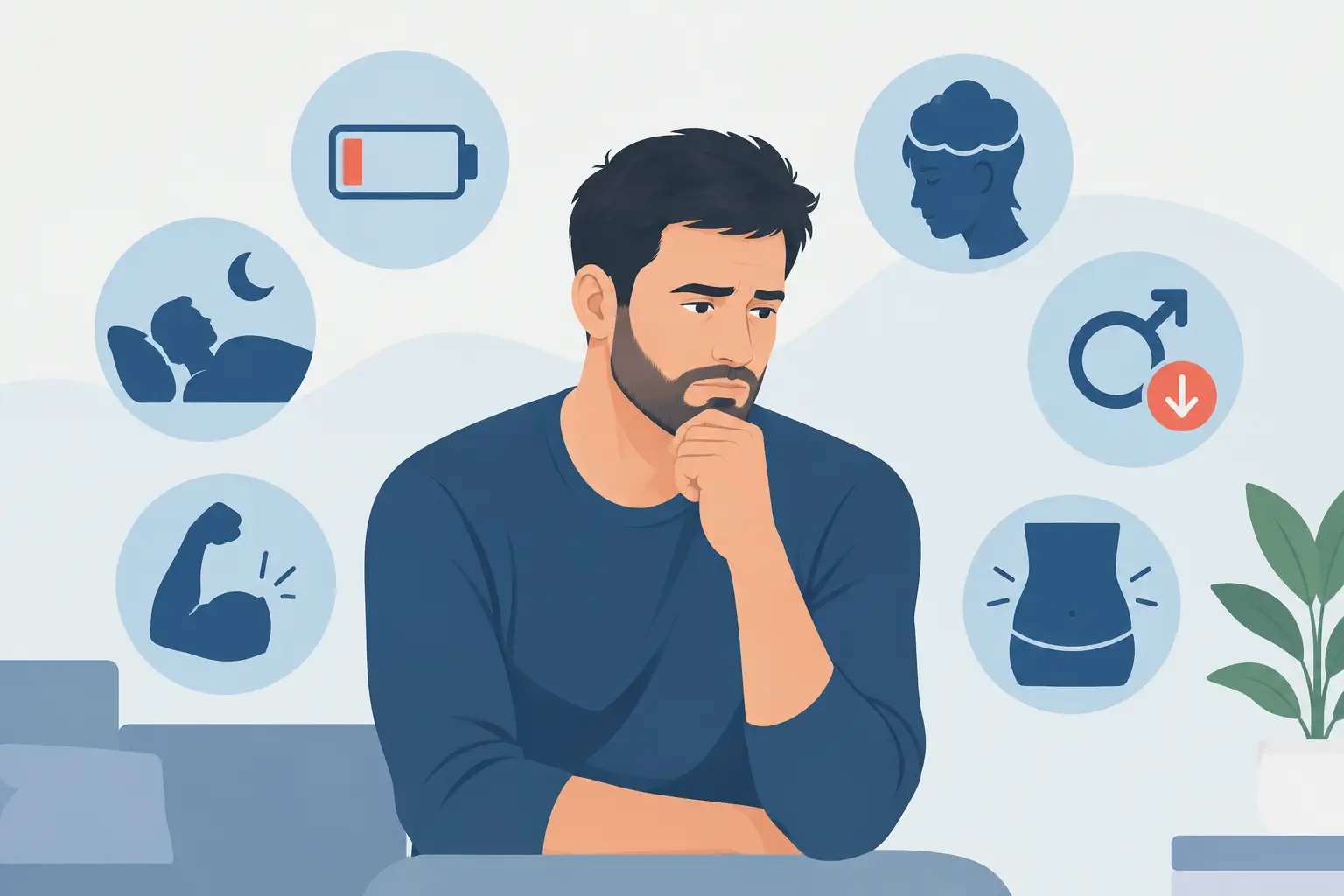
A flat training session, lower drive and a run of poor sleep can feel like a testosterone problem. Sometimes they are. Just as often, they reflect stress, under-fuelling, illness, alcohol, disrupted sleep or a demanding season of life. Knowing how to identify low testosterone means looking for a pattern, then confirming it with a proper clinical assessment rather than relying on a single symptom or an online quiz.
Testosterone supports far more than muscle mass and libido. It plays a role in sexual function, mood, bone health, red blood cell production, body composition and physical recovery. Levels also fluctuate throughout the day and can be temporarily affected by hard training, poor sleep and acute illness. Precision matters.
Low testosterone, also called testosterone deficiency or hypogonadism, is diagnosed through both symptoms and blood testing. Neither piece stands alone. A person may have a lower-than-expected result without meaningful symptoms, while another may have familiar symptoms caused by a different health issue.
The most useful clue is a sustained change from your normal baseline. You may notice that you are training consistently but losing strength or recovering more slowly than usual. Your interest in sex may drop, erections may become less reliable, or your general motivation may feel muted. These changes deserve attention when they persist for weeks or months, rather than appearing after a bad week at work.
A reduced libido is one of the more recognised symptoms of low testosterone, particularly when it is new and persistent. Some men also experience fewer spontaneous or morning erections, reduced sexual satisfaction or erectile difficulties.
Erectile dysfunction is not automatically a testosterone issue. Blood flow, cardiovascular health, diabetes, anxiety, relationship factors, sleep, alcohol and certain medicines can all contribute. A clinician will consider the full picture rather than treating every sexual symptom as a hormone problem.
Many people describe low energy, lower confidence, irritability or difficulty concentrating. These symptoms are real, but they are also non-specific. Depression, anxiety, burnout, sleep apnoea, thyroid disorders and nutritional deficiencies can present in similar ways.
This is where a doctor-led assessment protects you from guesswork. The aim is not to attach testosterone to every low-energy day. It is to identify whether hormone status is contributing and to rule out other conditions that need different care.
Testosterone helps maintain lean mass, bone density and strength. Lower levels can be associated with reduced muscle mass, increasing body fat, lower training capacity and slower recovery. Some men notice they need more effort to maintain the physique and performance that used to come more easily.
Ageing can contribute, but it should not be used as a catch-all explanation. Changes in training load, calories, protein intake, alcohol, stress and sleep may have a larger effect than expected. A good assessment considers these foundations alongside laboratory results.
Less commonly, low testosterone may be associated with reduced body hair, hot flushes, breast tenderness or enlargement, reduced testicular size, low bone density or unexplained anaemia. These signs should be assessed promptly, especially when they occur alongside changes in libido, energy or strength.
A testosterone diagnosis cannot be made from symptoms alone. Blood testing is essential, and timing matters. Testosterone is generally highest in the morning, so clinicians commonly arrange an early-morning test. If a result is low, it often needs to be repeated on a separate morning because day-to-day variation is normal.
Total testosterone is usually the starting point, but it is not always the whole answer. A clinician may also review sex hormone-binding globulin, often called SHBG, to interpret how much testosterone is available to tissues. Depending on your history and results, they may assess related hormones that help distinguish whether the issue is originating in the testes or in hormonal signalling from the brain.
Other tests can be equally valuable. A broader work-up may include a full blood count, iron studies, thyroid function, blood sugar markers, liver function and lipids. The right panel depends on your symptoms, medical history, medicines, fertility plans and baseline risk factors.
Avoid testing when you are acutely unwell, severely sleep-deprived or immediately after an unusually punishing training block if it can reasonably be delayed. Those circumstances can temporarily suppress testosterone and create a misleading snapshot. Be upfront with your clinician about supplements, recreational substances and prescription medicines too. Some can affect hormone levels or the interpretation of results.
Low testosterone has many potential causes. Excess body fat, particularly around the abdomen, can affect hormone regulation. So can persistent sleep restriction and untreated sleep apnoea. Heavy alcohol use, significant calorie restriction, overtraining and chronic psychological stress can all influence the hormonal environment.
Medical causes matter as well. Testicular injury or disease, pituitary conditions, diabetes, chronic illness and some medicines may contribute. Opioid pain medicines, long-term corticosteroid use and certain mental health medicines are examples worth discussing with a doctor, but never stop a prescribed medicine without medical advice.
Fertility is a critical consideration. If you are trying to conceive now or may want children in the future, say so at the first consultation. The approach to low testosterone can differ significantly when preserving fertility is a priority.
Testosterone replacement therapy, often called TRT, may be considered for adults with consistent symptoms, repeatedly confirmed low testosterone and a clinical reason for treatment. It is not a shortcut for poor sleep, a substitute for nutrition, or a default answer to normal ageing.
For the right person, TRT can improve symptoms linked to clinically confirmed testosterone deficiency. The response varies. Energy, sexual function, mood, body composition and training outcomes are influenced by many factors, so treatment should be judged against your individual symptoms, pathology and health goals rather than a promise of dramatic transformation.
TRT also requires ongoing clinical oversight. Testosterone can affect red blood cell levels, prostate-related monitoring where appropriate, fertility and other aspects of health. A clinician will review contraindications, assess relevant risks and organise follow-up blood tests. This is why black-market products and self-directed hormone use are not a performance strategy. They introduce uncertainty around quality, monitoring and avoidable health risk.
At OptivHealth, care begins with the clinical question: are your symptoms genuinely consistent with a hormonal issue, and what is the safest evidence-led next step? Doctor-led review and ongoing support keep the focus where it belongs – your health, not a one-size-fits-all protocol.
Before a hormone consultation, write down when your symptoms started and how they have changed. Note your sleep pattern, training routine, alcohol intake, medical conditions, current medicines and any recent changes in body weight or stress. If you have past blood results, bring those as well.
Be specific about your goals. Improving libido and erections, regaining training capacity, addressing fatigue and protecting long-term health can overlap, but they are not identical clinical problems. Clear goals help your practitioner choose appropriate investigations and make recommendations that fit your priorities.
If you have chest pain, severe shortness of breath, sudden neurological symptoms, marked depression or thoughts of self-harm, seek urgent medical care rather than waiting for a hormone assessment.
The most productive next move is simple: treat persistent symptoms as useful data, not proof of a diagnosis. With repeat morning testing, a considered medical history and proper follow-up, you can move beyond guesswork and make decisions that support your energy, strength, mood and long-term health.

Testosterone for men can affect energy, strength, libido and mood. Learn when symptoms merit a clinical assessment first and how…
Read more
When does ED treatment work? Learn what affects response, why low testosterone matters, and when a doctor should investigate erectile…
Read more
Considering testosterone therapy? Learn how low testosterone is assessed, who may benefit, and why doctor-led monitoring matters for Australian men…
Read moreNo pressure. No commitment. Just clarity and next steps.