October 21, 2026
Uncategorized
Testosterone for Men and the Low T Question
Testosterone for men can affect energy, strength, libido and mood. Learn when symptoms merit a clinical assessment first and how…
Read more


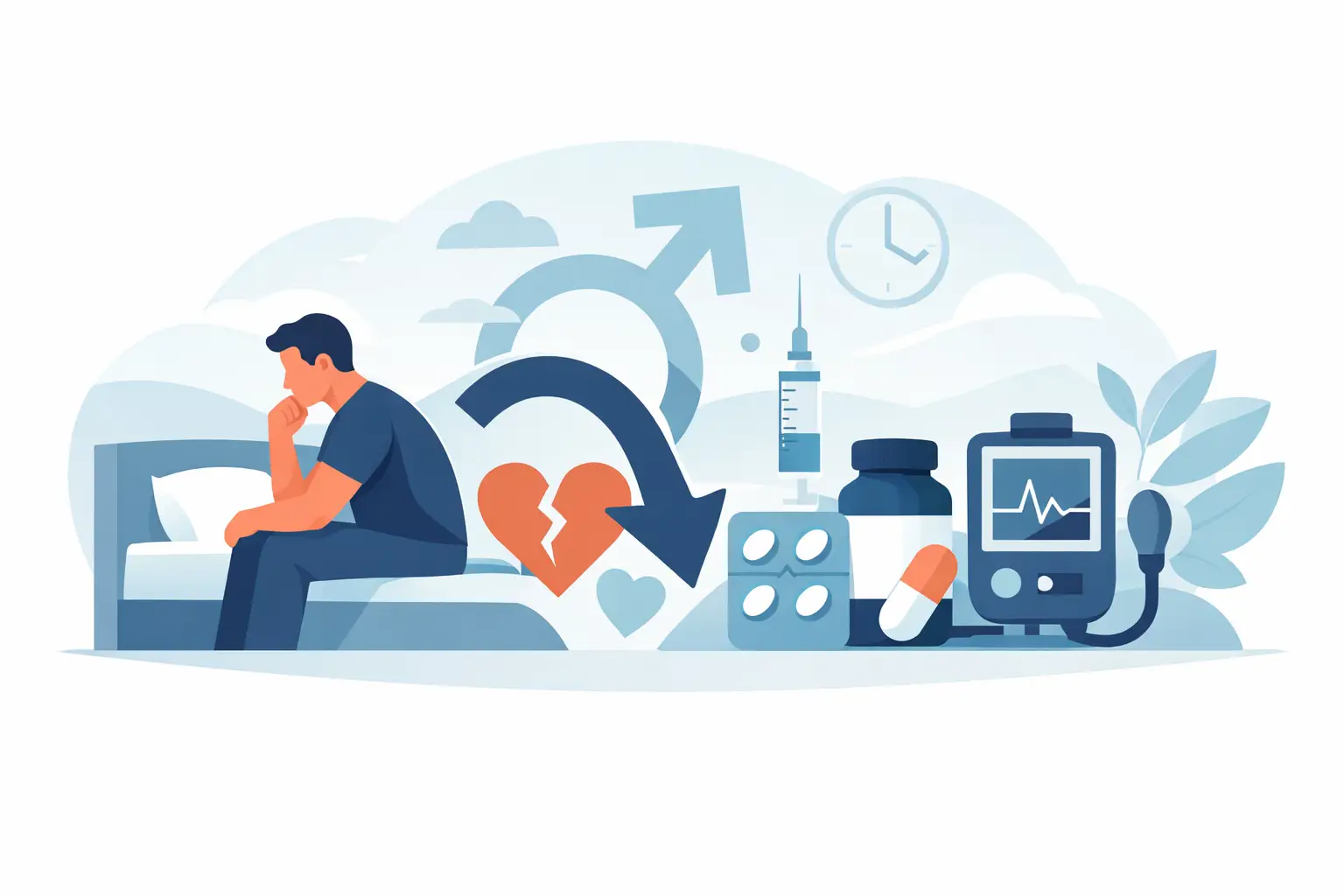
A change in erections can feel personal, but it is often useful clinical information. This erectile dysfunction treatment guide explains how to approach the issue with clarity: identify the likely contributors, rule out health concerns that deserve attention, and consider treatment options with a qualified clinician rather than relying on guesswork.
Erectile dysfunction, or ED, means difficulty getting or keeping an erection firm enough for satisfying sexual activity. It is common, and it does not reflect masculinity, commitment, or effort. For some men it happens occasionally during a stressful period. For others, it becomes persistent and begins to affect confidence, intimacy and overall quality of life.
The most effective path is rarely a single quick fix. Sexual function depends on circulation, nerve signalling, hormones, psychological wellbeing, sleep, relationships and general health. The right plan starts by understanding which factors are most relevant to you.
An erection requires healthy blood flow, responsive nerves, adequate sexual stimulation and a nervous system that is not stuck in a high-alert state. Disruption anywhere in that chain can affect performance.
Blood vessel health is a major consideration. High blood pressure, elevated cholesterol, diabetes, obesity and smoking can reduce blood flow and impair the lining of blood vessels. Because penile arteries are relatively small, erection changes can sometimes appear before more obvious cardiovascular symptoms. ED is not proof of heart disease, but persistent symptoms are a sensible reason to review cardiovascular risk factors.
Hormonal factors can also contribute. Low testosterone may reduce libido, energy and spontaneous erections, although it is not the cause of every erection problem. Thyroid conditions, raised prolactin and poorly controlled blood sugar may also affect sexual function. Testing only makes sense when it is guided by symptoms, health history and a clinician’s assessment.
Mental load matters too. Work pressure, poor sleep, depression, anxiety, relationship strain and performance anxiety can all interfere with arousal. This does not mean symptoms are all in your head. Psychological and physical factors commonly overlap. A man with mild circulation changes may then develop anxiety after a few disappointing experiences, making the issue harder to break.
Some medicines can affect erections or libido. This may include certain antidepressants, blood-pressure medicines, opioid pain medicines and treatments that influence hormone function. Never stop a prescribed medicine on your own. A prescriber can assess whether an adjustment or alternative is appropriate.
Book a clinical review if ED lasts for several weeks, recurs frequently, appears suddenly without an obvious explanation, or is affecting your wellbeing or relationship. Do not wait for it to become a source of silence or avoidance.
A prompt review is particularly worthwhile if you also have reduced exercise tolerance, chest discomfort, shortness of breath, loss of libido, fatigue, changes in body composition, increased thirst or frequent urination. These symptoms may have unrelated causes, but they warrant a proper health assessment.
Urgent medical care is needed for an erection that is painful or lasts longer than four hours, as this can cause tissue damage. Seek immediate care for chest pain or severe dizziness during sexual activity as well.
A quality assessment is more than a checkbox. A clinician will usually ask when symptoms began, whether erections occur during sleep or masturbation, how libido has changed, what medicines you take, and whether there are major stressors, health conditions or relationship concerns.
This pattern helps distinguish likely contributors. For example, reliable morning erections with difficulty during partnered sex may point towards situational anxiety, although it is not diagnostic on its own. A gradual decline across all settings, especially alongside vascular risk factors, requires a wider physical-health review.
Depending on your history, the clinician may recommend blood pressure checks and pathology testing for blood sugar, cholesterol, hormone markers or other relevant measures. The aim is not to test everything. It is to make decisions based on useful information and avoid treating a symptom while missing a modifiable driver.
Be direct in the consultation. Mention alcohol intake, recreational drug use, sleep, training load and any supplements. This information is clinically relevant and helps avoid unsafe treatment combinations.
Treatment should match the cause, your medical history and your preferences. For many men, clinician-prescribed oral treatments that support penile blood flow can be effective. They require medical review because they are not suitable for everyone and can interact dangerously with some heart medicines, particularly nitrate medicines used for chest pain.
These treatments assist the physical response to sexual stimulation. They do not create desire, resolve relationship conflict or overcome severe exhaustion. Timing, side effects, existing health conditions and other medicines all influence whether a particular option is appropriate.
If low testosterone is confirmed alongside compatible symptoms, a clinician may investigate the cause and discuss whether treatment is suitable. Testosterone should not be treated as a universal answer to ED. In men without clinically meaningful deficiency, it may not improve erections and can introduce avoidable risks. Ongoing monitoring is part of responsible hormone care.
Mechanical devices that create a vacuum around the penis may suit some men, especially where medicine is unsuitable or ineffective. They can be practical and non-systemic, but some people find them less spontaneous. Specialist treatments and surgical options exist for selected cases, usually after other approaches have been assessed.
Counselling or sex therapy can be highly useful when anxiety, low mood, trauma, relationship tension or fear of failure is involved. It is a practical treatment, not a dismissal. Reducing pressure, improving communication and rebuilding positive sexual experiences can change the pattern substantially.
Clinical treatment works best when the basics are not working against it. Improvements in cardiovascular fitness, metabolic health and recovery can support both erectile function and long-term health.
Regular aerobic exercise improves vascular function and blood-pressure control. Resistance training can support body composition, strength and insulin sensitivity. The useful target is a routine you can maintain, not a punishing short-term plan that leaves you depleted.
Sleep deserves equal attention. Short or fragmented sleep can lower energy, worsen mood, reduce libido and make stress responses more pronounced. Aim for consistent sleep and wake times, reduce late-night alcohol, and address loud snoring or suspected sleep apnoea. Sleep apnoea is strongly associated with ED and is often treatable.
Alcohol can lower inhibition in the moment while reducing erection quality physiologically, especially at higher intakes. Smoking and nicotine exposure impair blood vessels. Reducing either can be a meaningful step, even when it is not the whole solution.
Food does not need to be perfect, but a pattern built around minimally processed foods, fibre-rich plants, quality protein and unsaturated fats supports blood sugar, weight management and cardiovascular health. Extreme dieting, chronic under-eating and overtraining can have the opposite effect on libido and recovery.
Unregulated online products, borrowed medicines and vague sexual-performance supplements can carry real risks. Labels may be inaccurate, ingredients may be undisclosed, and interactions may be missed. The promise of discretion is not worth compromising your health.
Be cautious with claims of permanent improvement in days, hormone boosting without assessment, or treatment that is suitable for every man. ED has multiple causes. A credible care pathway makes room for medical history, treatment suitability and follow-up rather than pushing a one-size-fits-all answer.
Many men delay care because they expect embarrassment. In practice, ED is a routine clinical concern. Before an appointment, note when the problem started, how often it occurs, any changes in libido or morning erections, relevant medicines, and the health or lifestyle changes that occurred around the same time.
If you have a partner, an honest conversation can reduce the pressure that often fuels the problem. Frame ED as a shared health issue rather than a personal failure. Intimacy does not need to stop while you seek answers.
The goal is not simply to restore a single physical response. It is to protect sexual confidence, identify health risks early, and build a treatment plan that fits your body and life. A calm, doctor-led assessment is a strong first step towards reclaiming both certainty and connection.

Testosterone for men can affect energy, strength, libido and mood. Learn when symptoms merit a clinical assessment first and how…
Read more
When does ED treatment work? Learn what affects response, why low testosterone matters, and when a doctor should investigate erectile…
Read more
Considering testosterone therapy? Learn how low testosterone is assessed, who may benefit, and why doctor-led monitoring matters for Australian men…
Read moreNo pressure. No commitment. Just clarity and next steps.