October 21, 2026
Uncategorized
Testosterone for Men and the Low T Question
Testosterone for men can affect energy, strength, libido and mood. Learn when symptoms merit a clinical assessment first and how…
Read more


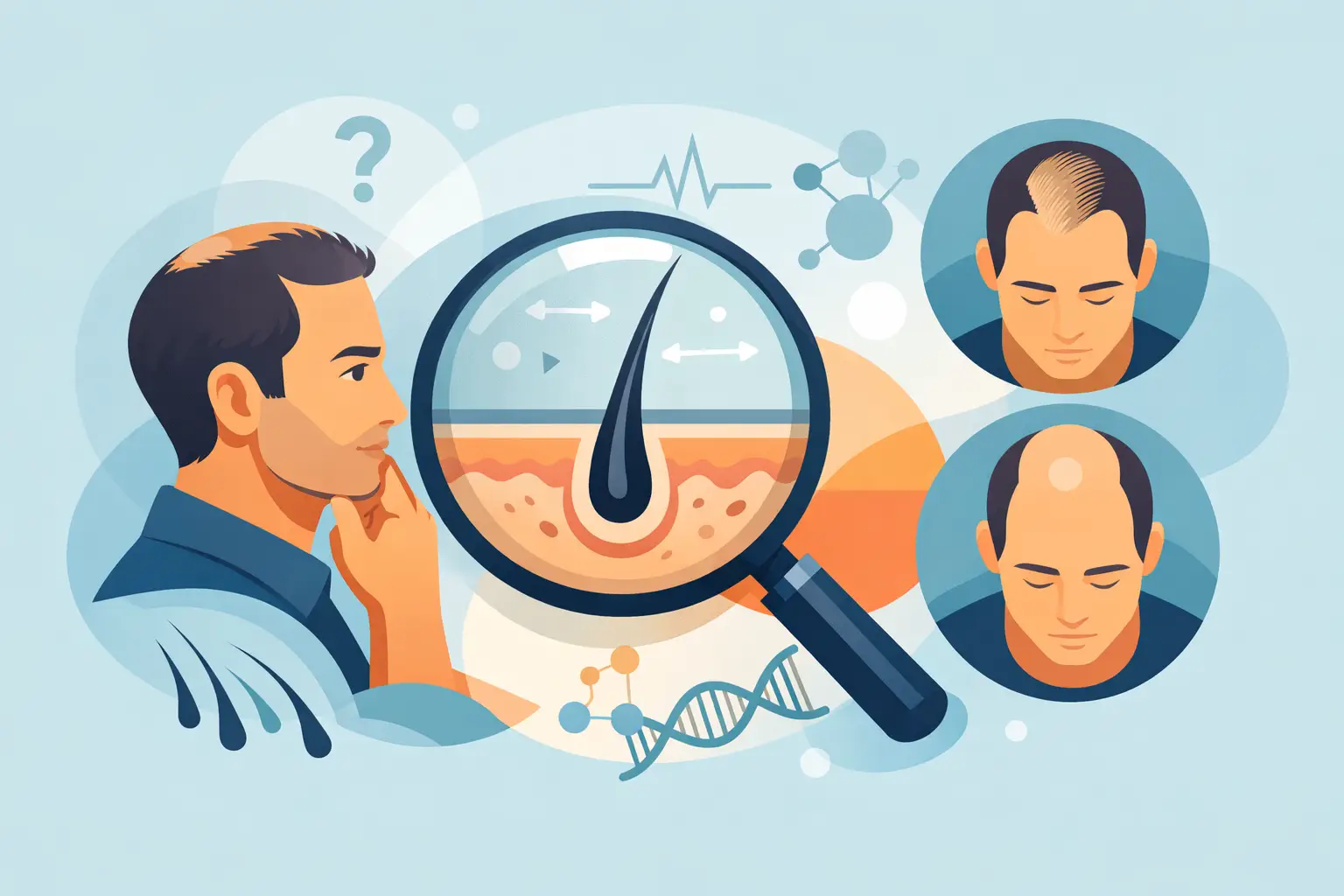
More hair in the shower, on your pillow or caught in your brush can feel like a small change until it is not. Hair loss is rarely just cosmetic. For many people, it affects confidence, training motivation, social comfort and how they feel when they look in the mirror. The useful question is not simply how to stop it. It is why it is happening, how quickly it is progressing and whether the follicles are still capable of producing healthy hair.
Early action gives you more options. Not every form of shedding needs treatment, and not every thinning pattern has the same cause. A clear assessment can separate a temporary shift from a progressive condition and prevent you from spending months on products that do not address the real issue.
It is normal to shed some hair each day. Hair follicles cycle through growth, transition and resting phases, so a degree of turnover is expected. The concern begins when shedding noticeably increases, the part line widens, the hairline recedes, density reduces through the crown, or bald patches appear.
The pattern matters. Gradual thinning at the temples and crown is common in men, while women may notice a broader part line or reduced volume across the top of the scalp. This type of pattern is often influenced by inherited follicle sensitivity and hormonal signalling. It tends to progress slowly, which can make it easy to dismiss until there is a significant change.
Sudden, diffuse shedding across the scalp is different. It may occur several months after a major stressor, illness, surgery, rapid dietary change, poor sleep, intense training block or a period of hormonal change. In these cases, more follicles can shift into their resting phase at once. The shedding can be confronting, but the underlying trigger may be temporary.
Patchy hair loss, scalp pain, burning, marked redness, scaling or shiny areas without visible follicle openings deserve prompt medical assessment. These features can point to inflammatory, autoimmune or scarring conditions, where protecting the remaining follicles is time-sensitive.
Genetics are a major factor, but they are not the entire story. A family history of thinning can increase your likelihood of developing pattern hair loss, yet the speed and severity of change can be influenced by age, hormones, general health and lifestyle pressures.
Hormonal changes are particularly relevant. Thyroid disorders, changes after pregnancy, menopause, polycystic ovary syndrome and altered androgen activity can all affect the hair cycle. For men, hair changes may occur alongside shifts in energy, libido, mood, muscle maintenance or body composition. These symptoms do not confirm a hormonal cause, but they provide useful context for a clinician.
Nutritional status also matters, especially when dietary restriction is aggressive or prolonged. Low iron stores, insufficient protein intake and deficiencies in nutrients required for normal cell function may contribute to shedding. This does not mean a shelf full of supplements is the answer. Taking high-dose products without evidence of a deficiency can be ineffective and, in some cases, counterproductive.
Stress is another commonly misunderstood factor. It is not only emotional stress that counts. Poor recovery, persistent sleep debt, overtraining, infection, injury and major weight fluctuation can all place the body under strain. Hair growth is not essential to short-term survival, so the body may direct resources elsewhere when demands are high.
Some medicines and medical conditions can also contribute. That is why a history of recent health changes, new medicines, dietary shifts and family patterns is more valuable than guessing based on a single photo or a social media trend.
Hair grows slowly, and the hair cycle responds slowly too. A trigger from three or four months ago may explain shedding happening now. Equally, meaningful improvement can take months because new growth must move through a full cycle before density becomes visible.
This delay creates a trap. People often change several things at once, then cannot tell what helped, what caused irritation or whether the shedding would have settled independently. A measured plan, consistent monitoring and realistic timeframes are more useful than constant product switching.
Hair care will not reverse every biological driver of thinning, but it can reduce avoidable breakage and scalp irritation. Treat the hair shaft gently, particularly if it is already fine or fragile. Frequent bleaching, high-heat styling, tight styles and harsh chemical processing can make reduced density look worse by increasing breakage.
Your training and nutrition strategy also deserves an honest review. Performance goals should not require chronic under-fuelling. If you are cutting calories, increasing training volume or relying on restrictive food rules, ensure protein intake and overall nutrition are appropriate for your body and activity level. Recovery is part of the programme, not a reward for finishing it.
Sleep and stress management are equally practical. They will not override genetic hair loss, but they support the physiological conditions in which normal growth cycles are more likely to recover after a temporary disruption. Aim for repeatable habits rather than a perfect routine for two weeks.
Be cautious with over-the-counter claims. Cosmetic products may improve the look and feel of hair, but they are not automatically treatments for follicle-level hair loss. Before-and-after images rarely show the full picture: lighting, hair length, styling, timing and concurrent changes can all alter the result.
A good assessment begins with the story behind the shedding. When did it start? Is it thinning, shedding or breakage? Is there a family history? Have there been changes in health, sleep, diet, stress, training, menstrual cycles or medicines?
A clinician may review your scalp pattern, medical history and relevant symptoms before deciding whether further investigation is appropriate. Blood tests are not necessary for every person with thinning, but they can be useful when the history suggests a nutritional, thyroid, hormonal or systemic contributor.
Photos can help track progress if they are taken consistently. Use the same lighting, angle, hair part and distance each time, ideally every few months rather than every few days. Hair changes are gradual. Consistent records make it easier to judge whether a plan is holding steady, improving density or allowing further progression.
At OptivHealth, the focus is on doctor-led assessment rather than one-size-fits-all claims. Hair loss can overlap with broader concerns around hormonal health, recovery, energy and metabolic health, but each factor should be considered on its own clinical merits. The right approach depends on your pattern, health history, goals and suitability for care.
For progressive pattern hair loss, treatment is often most effective when started before follicles have been inactive for years. The aim may be to slow further loss, maintain existing density or support regrowth where follicles remain viable. Outcomes vary, and no responsible clinician should promise a particular result.
Depending on the cause, a care plan may focus on managing an underlying health issue, correcting a confirmed deficiency, addressing scalp inflammation or considering clinically appropriate prescription options. Prescription treatments have potential benefits and risks, and suitability must be assessed individually. Factors such as pregnancy plans, existing medical conditions, other medicines and the type of hair loss all matter.
Be wary of unregulated products, exaggerated hormone claims and protocols sold without a proper medical review. Hair loss is an area where desperation can make shortcuts look persuasive. Quality control, accurate diagnosis and follow-up matter more than a dramatic headline.
If your hair is changing, take clear photos, note the timeline and book an assessment before guessing. The most useful next step is not chasing a miracle. It is understanding your pattern early enough to make informed decisions with confidence.

Testosterone for men can affect energy, strength, libido and mood. Learn when symptoms merit a clinical assessment first and how…
Read more
When does ED treatment work? Learn what affects response, why low testosterone matters, and when a doctor should investigate erectile…
Read more
Considering testosterone therapy? Learn how low testosterone is assessed, who may benefit, and why doctor-led monitoring matters for Australian men…
Read moreNo pressure. No commitment. Just clarity and next steps.