October 21, 2026
Uncategorized
Testosterone for Men and the Low T Question
Testosterone for men can affect energy, strength, libido and mood. Learn when symptoms merit a clinical assessment first and how…
Read more


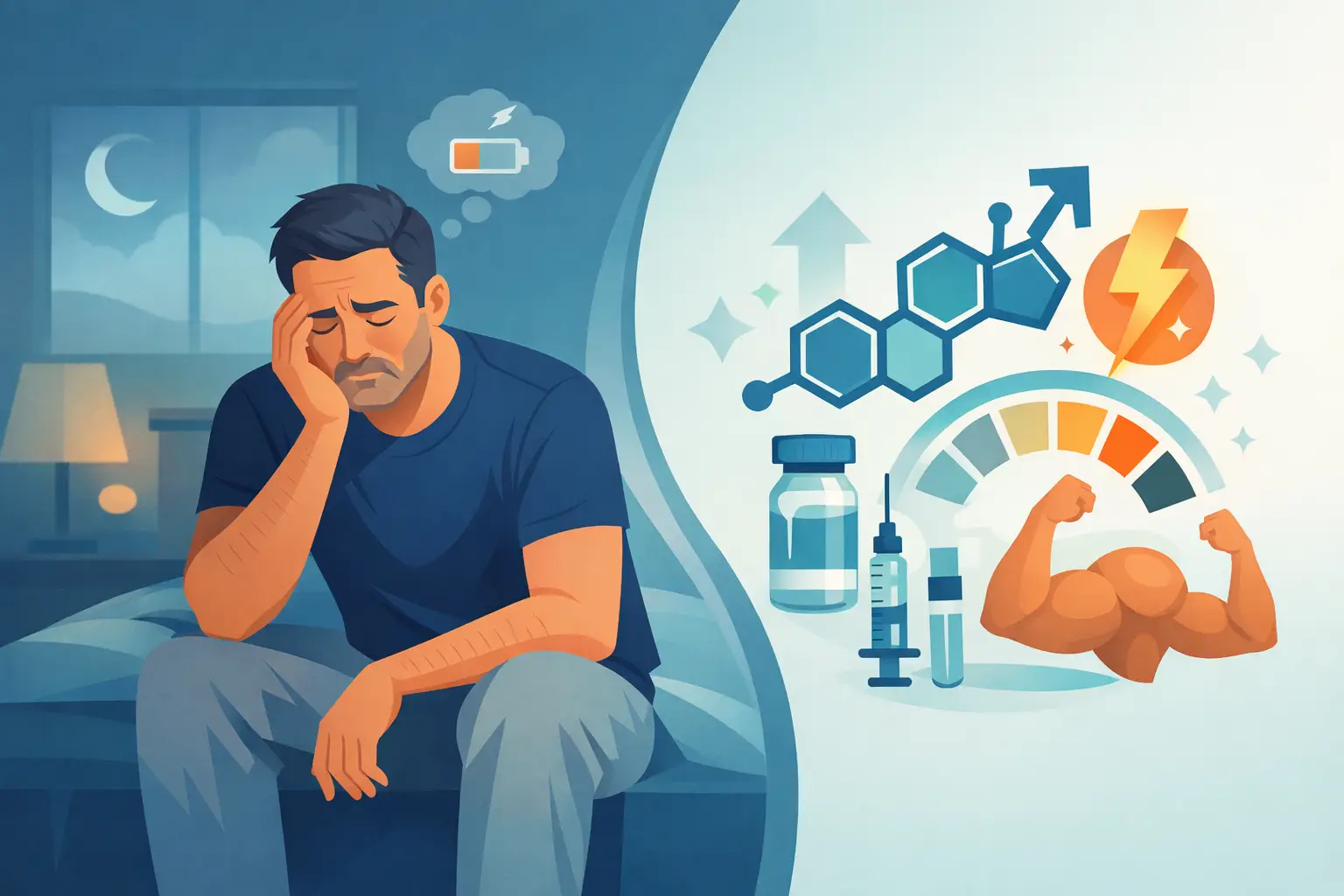
Low energy can change the way you train, work, recover and show up in your relationships. But testosterone therapy for low energy is not a shortcut for every afternoon slump or demanding season. It is a clinical treatment that may be considered when symptoms and properly interpreted blood results point to testosterone deficiency.
The distinction matters. Testosterone is central to libido, sexual function, muscle mass, bone health, red blood cell production, mood and motivation. Yet fatigue is also one of the least specific symptoms in medicine. Poor sleep, high stress, low calorie intake, alcohol, depression, thyroid disorders, iron deficiency, sleep apnoea and certain medicines can all leave you running below capacity.
A good clinical process does not assume. It investigates.
Low testosterone, also called hypogonadism, is more than feeling tired after a hard week. Clinicians look for a consistent pattern of symptoms alongside low testosterone levels on blood testing. Energy may be part of that pattern, but it is rarely the whole picture.
Other symptoms can include reduced libido, fewer spontaneous erections, a decline in strength or lean mass, increased body fat, lower exercise tolerance, poorer recovery, low mood, impaired concentration and reduced drive. Some men describe it as feeling unlike themselves: training becomes harder to sustain, ambition feels muted, and the capacity to bounce back disappears.
These signs still do not confirm a diagnosis on their own. Age, body composition, sleep quality and general health all influence hormone levels. A single blood result can also be misleading. Testosterone naturally fluctuates through the day and can be temporarily suppressed by illness, poor sleep, heavy training, alcohol use or an aggressive dieting phase.
That is why doctor-led assessment is the standard. The goal is not simply to find a number outside a reference range. It is to understand whether a hormone issue is genuinely contributing to the way you feel and function.
A considered assessment starts with your health history, symptoms, goals and current lifestyle. Be ready to discuss sleep, training load, nutrition, alcohol intake, stress, mental health, sexual function, fertility plans and all medicines or supplements you use. The details often reveal the most useful next step.
Blood testing is generally performed in the morning, when testosterone levels are typically highest. If a result is low, repeat testing may be required to confirm it. A clinician may also assess related markers, including sex hormone-binding globulin, free testosterone calculations, full blood count, thyroid function, iron studies, blood glucose, lipids and other hormones where relevant.
This broader view has a practical purpose. Low energy can be caused by a correctable issue that testosterone treatment will not solve. For example, untreated sleep apnoea can lower daytime energy and affect hormone levels. Severe calorie restriction can impair recovery and suppress reproductive hormones. Correcting the underlying driver may be the more effective and safer strategy.
Your doctor will also consider whether low testosterone is primary, meaning the issue originates in the testes, or secondary, meaning signalling from the brain and pituitary may be affected. The likely cause influences what further investigation, treatment or specialist input is appropriate.
Reference ranges are useful, but they are not a performance scorecard. A result at the lower end of the range does not automatically mean treatment is suitable. Equally, a result must be interpreted in the context of symptoms, repeat testing and the individual’s health profile.
This is especially relevant for busy professionals and committed trainers. Chronic sleep debt, high work pressure and frequent intense sessions can create a convincing low-testosterone symptom profile. If the cause is a lifestyle mismatch, treating the mismatch first may produce more durable gains in energy and recovery.
For men with confirmed testosterone deficiency, medically supervised testosterone therapy may improve specific symptoms over time. Sexual symptoms, body composition, strength, bone health and mood may be relevant treatment considerations depending on the individual. Energy can improve too, but the response is variable.
That variability deserves honesty. Fatigue has many inputs. If low energy is largely driven by fragmented sleep, under-fuelling, anxiety, a demanding travel schedule or an iron deficiency, testosterone therapy may not deliver the change you expect. It should not replace fundamental health habits or appropriate investigation of other medical conditions.
The right expectation is not limitless energy. It is a measured effort to address a verified hormonal deficiency, with progress assessed against symptoms, function and safety markers. Treatment decisions should be revisited as your health, goals and life stage change.
Testosterone therapy is also not appropriate for everyone. A clinician will consider factors such as prostate health, elevated red blood cell count, untreated sleep apnoea, certain cardiovascular risks and a history of hormone-sensitive cancers. Individual risks vary, so personal medical history matters more than generic online advice.
If you want to preserve fertility now or in the future, say so before any treatment decision is made. Testosterone therapy can suppress sperm production and may reduce fertility. This is one of the most consequential trade-offs, and it should be addressed clearly rather than treated as a footnote.
For some people, fertility goals change the clinical pathway entirely. The best plan depends on your results, timeframe, reproductive priorities and overall health. A qualified doctor can explain the options and determine whether specialist referral is needed.
Starting treatment is not the end of the process. Ongoing medical review helps determine whether therapy remains appropriate, whether symptoms are improving, and whether safety markers require attention.
Monitoring commonly includes reviewing energy, mood, sexual function, sleep, training response and any side effects, alongside follow-up blood tests where clinically indicated. Red blood cell levels, hormone levels and prostate-related considerations may need ongoing attention. The exact schedule depends on your health profile and your clinician’s judgement.
This is where unregulated online hormone products create unnecessary risk. Without proper assessment and follow-up, it is easy to mistake a temporary symptom for a hormone disorder, overlook a contraindication, or miss changes that warrant a clinical response. No black-market products. No shortcuts. Hormonal health deserves the same discipline you apply to training and recovery.
Even when testosterone deficiency is confirmed, the basics still shape your outcome. Prioritise consistent sleep, adequate protein and energy intake, sensible resistance training, regular movement and alcohol moderation. These habits support metabolic health, recovery and wellbeing regardless of your hormone results.
Be careful with overtraining and prolonged dieting. More effort is not always better. When workload, training volume and food intake are out of balance, low energy is often predictable physiology rather than a failure of motivation. A short period of better recovery can be more revealing than another stimulant, supplement or punishing training block.
It is also worth tracking your symptoms before and after any changes. Note your sleep duration, training performance, libido, morning energy, mood and concentration for several weeks. Clear patterns give your clinician better information than trying to recall how you felt three months ago.
Low energy is feedback, not a diagnosis. If it has persisted for weeks, is affecting your work or training, or appears alongside reduced libido, sexual changes, loss of strength or low mood, a structured clinical assessment is worthwhile.
OptivHealth’s doctor-led approach is designed to assess the full picture, not chase a single result. The aim is to identify what is limiting your performance and health, then determine whether testosterone therapy is clinically appropriate within a monitored plan.
Start with the facts: your symptoms, your blood results, your health history and your goals. The right answer may be testosterone therapy, a different medical investigation, or a targeted reset of sleep, nutrition and recovery. Either way, clarity is a far better foundation for reclaiming your energy than guessing.

Testosterone for men can affect energy, strength, libido and mood. Learn when symptoms merit a clinical assessment first and how…
Read more
When does ED treatment work? Learn what affects response, why low testosterone matters, and when a doctor should investigate erectile…
Read more
Considering testosterone therapy? Learn how low testosterone is assessed, who may benefit, and why doctor-led monitoring matters for Australian men…
Read moreNo pressure. No commitment. Just clarity and next steps.