October 21, 2026
Uncategorized
Testosterone for Men and the Low T Question
Testosterone for men can affect energy, strength, libido and mood. Learn when symptoms merit a clinical assessment first and how…
Read more


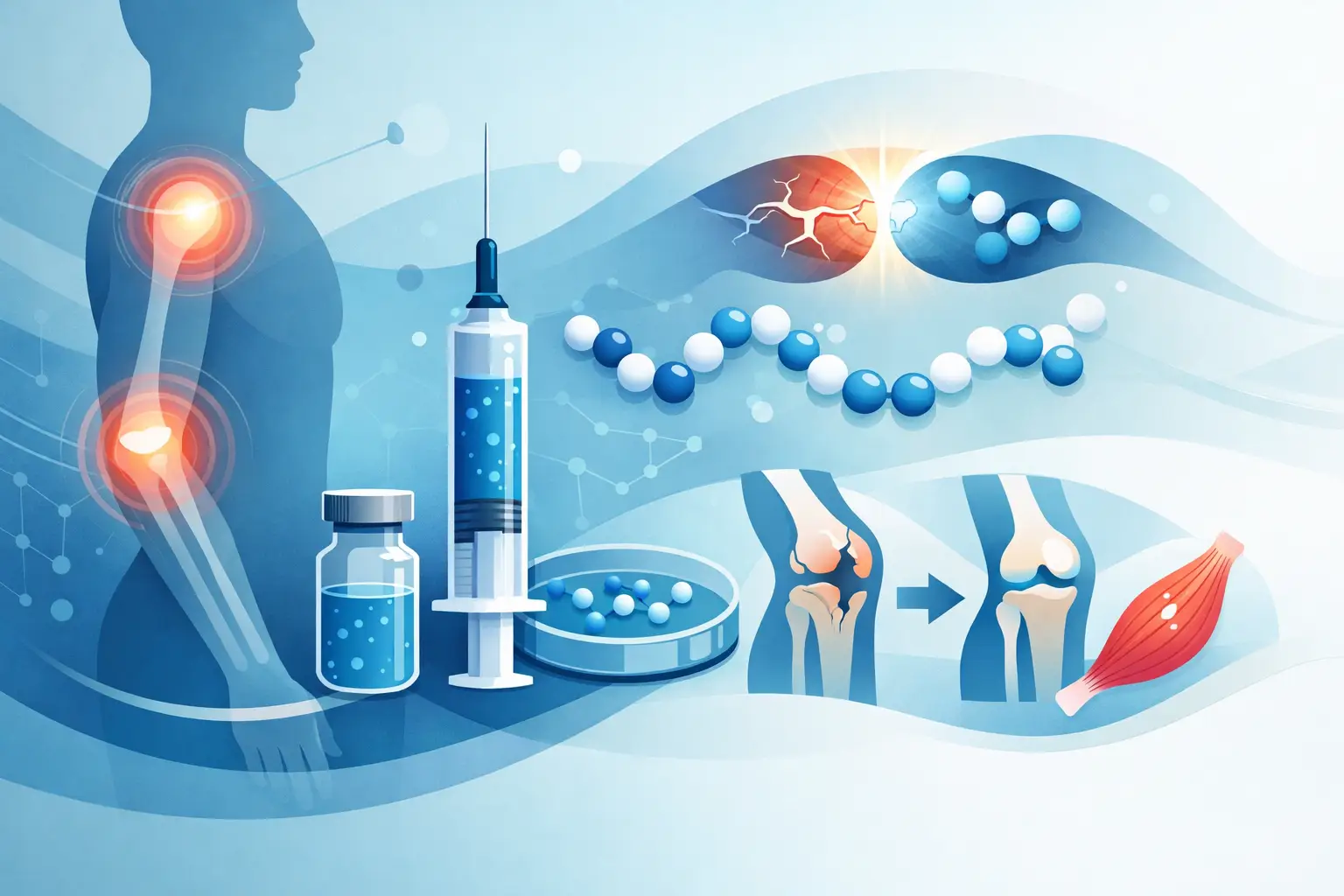
A tendon that still bites months after the original strain, a shoulder that limits training, or a slow-healing soft-tissue injury can change more than your gym program. It can disrupt work, sleep, confidence and the routines that keep you feeling like yourself. Peptide therapy for injury repair is a topic many people search for, but the evidence in people is limited, and no peptide is a replacement for diagnosis, rehabilitation or sensible load management.
The right question is not, “Which peptide fixes this?” It is, “What is driving the injury, what does the evidence actually show, and what care is appropriate for me?” That is where a proper clinical assessment matters.
Your body repairs injury in stages. First comes inflammation, which is necessary for clearing damaged tissue and signalling the healing response. Then comes tissue proliferation, when cells begin rebuilding. Finally, the remodelling phase reorganises new tissue so it can tolerate force again.
Each stage has different demands. A fresh muscle tear, chronic Achilles tendinopathy, post-operative recovery and a recurrent shoulder issue may all involve pain, but they are not the same clinical problem. They need different decisions around imaging, training modification, physiotherapy, nutrition and medical treatment.
This is why a recovery protocol should never be built around a symptom alone. Persistent pain may signal a tendon issue, joint pathology, nerve involvement, poor movement mechanics or an injury that needs more conventional care. Trying to train through it or self-prescribing research chemicals can turn a manageable issue into a longer lay-off.
Peptides are short chains of amino acids, and some act as signalling molecules in the body. A small number of peptide-based medicines are approved in Australia for specific conditions. Much of what is claimed online about peptides and injuries comes from laboratory or animal research rather than studies in people.
That research is why peptides come up in conversations about sport and recovery. But early research is not the same as proven benefit, and no medicine replaces diagnosing an injury properly and addressing the mechanical and lifestyle factors that caused it.
However, “peptide” is not a single category and it is not a guarantee of results. Different compounds have different proposed mechanisms, evidence bases, legal classifications, routes of administration and risk profiles. Some are established medicines for specific indications. Others have limited human data, are not approved for broad injury use, or may only be considered in carefully selected circumstances by a qualified practitioner.
A credible clinician will be clear about that distinction. They will not present a peptide as a miracle cure for torn tissue, arthritis or every kind of pain.
If recovery has stalled despite sensible rehabilitation, it is reasonable to talk to a doctor. They can look at the injury itself and at other factors that may be holding recovery back, such as poor sleep, low energy, inadequate nutrition or a hormonal issue, and decide whether further tests, a referral or treatment is appropriate.
Suitability depends on the injury, your medical history, current medications and goals. It also depends on what has already been tried. Someone with a diagnosed overuse injury who is following a progressive loading program is a very different case from someone with unexplained swelling, acute instability or severe pain after trauma.
A responsible assessment also considers red flags. Sudden loss of strength, inability to bear weight, fever, major swelling, numbness, chest symptoms or pain that follows a significant accident require prompt in-person medical assessment. Telehealth can make high-quality care more accessible, but it does not replace urgent examination when urgent examination is needed.
Interest in peptide therapy has moved faster than the evidence in people for most injury-related uses. Much of what is claimed online is based on laboratory and animal studies, and those results do not automatically apply to people.
Human studies may be small, use different dosing approaches, focus on different injuries, or measure outcomes over short periods. That makes it difficult to promise a standard result or recovery timeline. Your baseline fitness, injury severity, age, training load, sleep, metabolic health and adherence to rehabilitation all influence the outcome.
This is why a doctor’s assessment matters. Any discussion about treatment should cover the evidence, the uncertainties, the alternatives and the risks. For many injuries, the most reliable approach is physiotherapy, progressive strength work, sleep, protein intake and time. If a treatment is considered, it should have a defined purpose and regular review points.
The peptide market is crowded with products sold as “research use only” while being marketed directly to people seeking faster recovery. These products can carry serious quality concerns: incorrect identity or concentration, poor sterility, contamination, inadequate storage and no meaningful support if something goes wrong.
No black-market products. No improvised mixing instructions. No guessing at doses based on a social-media post.
Medical supervision creates a different standard. A practitioner reviews whether treatment is appropriate, checks relevant health factors and explains how any prescribed medicine should be used. Where a medicine is prescribed, it should be dispensed by a licensed Australian pharmacy.
Monitoring matters after treatment starts as well. Depending on the protocol and your circumstances, that can involve symptom tracking, progress reviews, pathology where clinically indicated, and adjustments based on response and tolerability. If a treatment isn’t clearly helping, it should be changed or stopped.
Even the best clinical plan will underperform if the injury is continually re-aggravated. Tissue needs the right amount of stress – enough to stimulate adaptation, not so much that it cannot recover. That is the role of a structured rehabilitation plan, ideally guided by an appropriate allied-health professional where needed.
Protein intake, total energy intake and hydration also matter. People trying to stay lean often underfuel during recovery, particularly when training volume drops. The result can be low energy availability, poorer sleep and slower adaptation. Your doctor or nutrition professional can help set an approach that supports healing without losing sight of body-composition goals.
Sleep is equally practical. Deep sleep supports physical recovery, pain tolerance and training readiness. If pain, stress, snoring, alcohol intake or late-night work are reducing sleep quality, addressing those factors may improve your progress more than adding another supplement ever could.
The process should feel clear, not complicated. First, complete a detailed health assessment covering the injury, diagnosis, training history, medical conditions and medications. Next, consult with an Australian-registered practitioner or doctor who can determine whether further investigation, referral or treatment is appropriate.
If a prescription is clinically appropriate, it should be personalised rather than copied from a generic online template, and dispensed by a licensed Australian pharmacy with clear instructions for use. Follow-up closes the loop: your response, side effects, rehabilitation progress and goals determine whether treatment continues, changes or stops.
OPTIV Health is built around this doctor-led model, with clinical review and ongoing support from our team of pharmacists and allied health professionals. If you’d like to talk it through, start with a free care call.
No. Rehabilitation is the foundation of injury recovery. No medicine can correct poor movement patterns, restore joint control or progressively rebuild tendon and muscle capacity. Skipping rehab is one of the fastest ways to create a recurring injury cycle.
There is no universal timeframe. Pain may change before tissue capacity does, and feeling better does not always mean an injury is ready for full training. Return-to-training decisions should be based on function, strength, tolerance and clinical guidance, not motivation alone.
No. Medical history, current treatments, reproductive considerations, allergies, cancer history, cardiovascular risk and the nature of the injury can all affect suitability. A clinician should assess these factors before recommending any prescription therapy.
The best recovery plan is rarely the most aggressive one. It is the one that gives your body a genuine chance to heal, protects the progress you have made, and gets you back to training with more confidence than caution.

Testosterone for men can affect energy, strength, libido and mood. Learn when symptoms merit a clinical assessment first and how…
Read more
When does ED treatment work? Learn what affects response, why low testosterone matters, and when a doctor should investigate erectile…
Read more
Considering testosterone therapy? Learn how low testosterone is assessed, who may benefit, and why doctor-led monitoring matters for Australian men…
Read moreNo pressure. No commitment. Just clarity and next steps.